
Grigori Rasputin
- Born
- January 21, 1869
- Died
- December 30, 1916
Read transcript
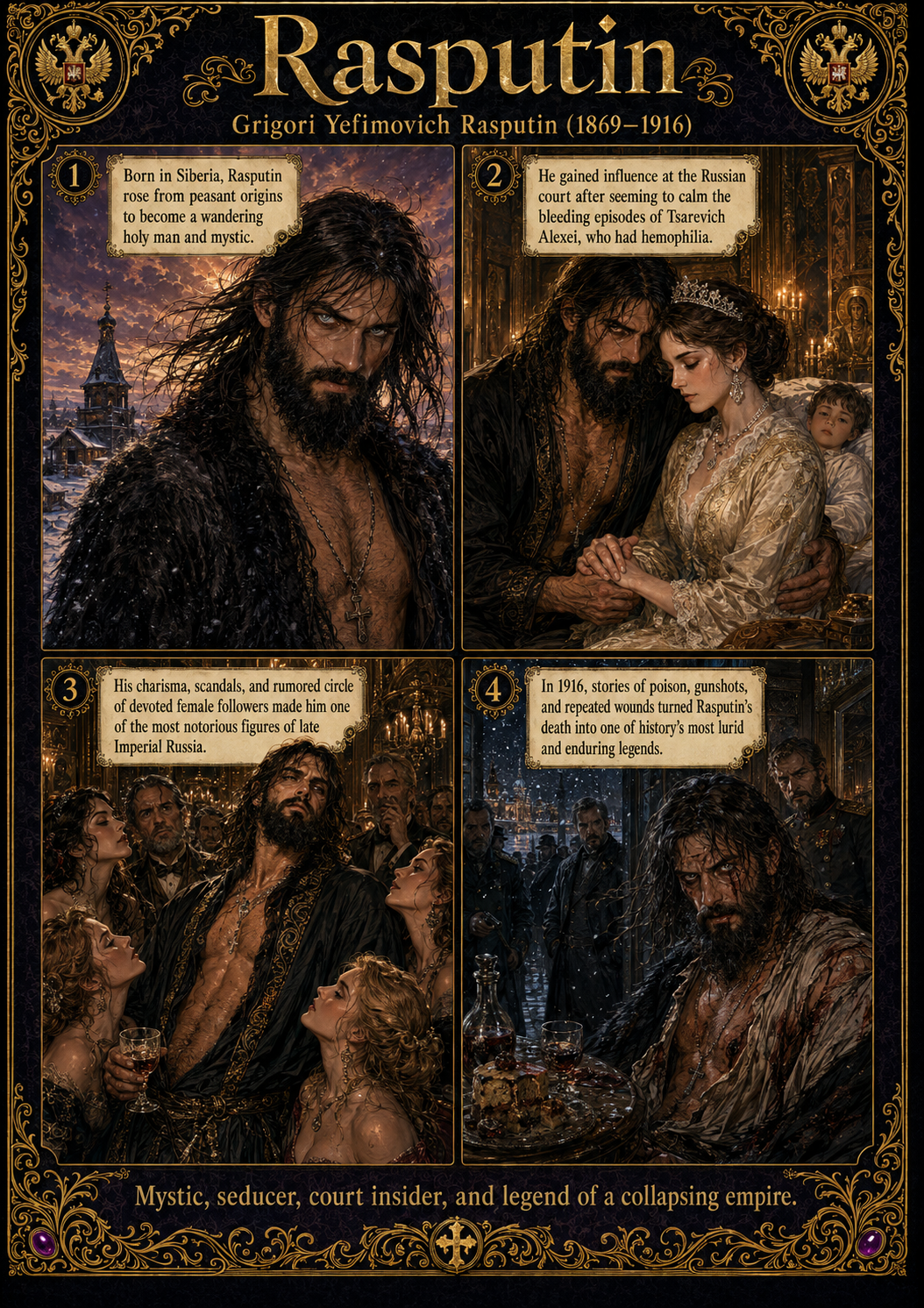
Rasputin: Grigori Yefimovich Rasputin (1869–1916). Mystic, seducer, court insider, and legend of a collapsing empire.
-
Panel1 SceneA long-haired, bearded Rasputin stands in snow before a Siberian church.
TextBorn in Siberia, Rasputin rose from peasant origins to become a wandering holy man and mystic.
-
Panel2 SceneRasputin comforts Empress Alexandra beside the bed of the young Tsarevich Alexei.
TextHe gained influence at the Russian court after seeming to calm the bleeding episodes of Tsarevich Alexei, who had hemophilia.
-
Panel3 SceneAt an opulent gathering, an open-shirted Rasputin drinks while admirers and disapproving courtiers surround him.
TextHis charisma, scandals, and rumored circle of devoted female followers made him one of the most notorious figures of late Imperial Russia.
-
Panel4 SceneA wounded Rasputin sits at a banquet table while armed conspirators watch from the shadows.
TextIn 1916, stories of poison, gunshots, and repeated wounds turned Rasputin’s death into one of history’s most lurid and enduring legends.
Fact-check note: Rasputin was born January 21, 1869, and died December 30, 1916, using the modern Gregorian calendar; Russian records of the time give January 9 and December 17 under the Julian calendar. The imperial family believed he could ease Tsarevich Alexei’s hemophilia crises, but how—or whether—he affected the illness remains uncertain. His sexual reputation mixed documented scandal with hostile rumor. Most importantly, the famous poison-and-repeated-resurrection murder story comes largely from conspirator Felix Yusupov’s later account: surviving autopsy evidence mentions no poison or drowning and indicates that gunshots killed him. Smithsonian history of the murder · Forensic review